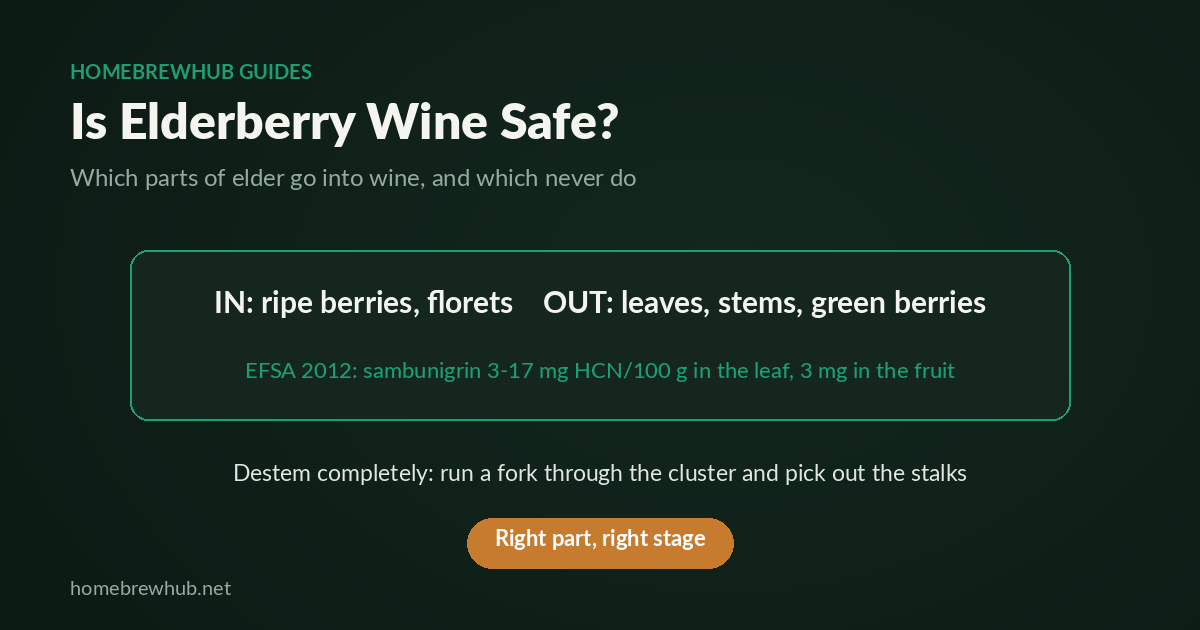
Elderberry wine is made from ripe, fully destemmed berries, and those are the parts considered safe to use. The parts of elder that are flagged are the leaves, the stems and branches, unripe green berries and the seeds. The European Food Safety Authority's compendium of botanicals (2012) lists a cyanogenic glycoside, sambunigrin, in black elder at 3 to 17 mg of HCN per 100 g in the fresh leaf against 3 mg per 100 g in the fruit, notes lectins in the branches, and records that branches, unripe berries or seeds of various elder species can cause digestive disorders.
Which parts of elder should never go into wine?
| Part of the plant | Use in wine? | Why |
|---|---|---|
| Ripe berries | Yes, destemmed | The part used for elderberry wine |
| Flowers (florets) | Yes, without stems | Used for elderflower wine; the stems stay out |
| Leaves | No | Sambunigrin up to about five times the level in the fruit |
| Stems and branches | No | Lectins; listed as a cause of digestive disorders |
| Unripe green berries | No | Listed as a cause of digestive disorders |
Summarized from Home Fruit & Country Winemaking Science, Chapter 11, after the EFSA compendium of botanicals (2012).
Does this mean elder is poisonous?
No, and the compendium says so itself: it makes no judgment on whether a plant is suitable as food. Being listed means a substance of possible concern has been reported, not that the plant is a poison. The practical rule is about using the right part at the right stage: ripe berries and clean florets in, everything green and woody out.
How do you destem elderberries properly?
- Pick fully ripe clusters. Leave any cluster that still has green berries, or strip the green ones out.
- Run a fork through the cluster. The berries drop off and the stalks stay behind. Pick out any small stems that fall in with them.
- Wear gloves. The juice stains skin and work surfaces deep purple.
In the EFSA figures the elder leaf carries up to about five times as much sambunigrin as the fruit. That is why leaves and stems are kept out of the must, whatever the recipe tradition says.
Are elderflowers safe in wine?
The flowers are used for elderflower wine, but as florets only: strip them from the stems, leave out leaves, stalks and any woody parts, and pick from bushes that have not been sprayed. Elderflower wine is an infusion, so the flowers come out after a few days and bring aroma rather than sugar or acid.
Does boiling elderberries help?
Boiling is used for color. In a trial by Wang and co-authors (2024), with 1 kg of crushed berries to 3 L of water, berries boiled for 5 minutes gave the wine with the most anthocyanins, more than berries covered with boiling water or soaked cold. Our sources do not present heating as a way to make stems, leaves or green berries safe, so they stay out whether you boil or not.
Try the free Elderberry Wine and Elderflower Wine recipes: both list exactly which parts go in.
Raw material safety, in depth
Home Fruit & Country Winemaking Science covers elder, stone fruit and the plants that never go into wine in Chapter 11.
Educational content. Make and drink alcoholic beverages only if you are of legal drinking age where you live, and check local rules before making alcoholic drinks. Full disclaimer