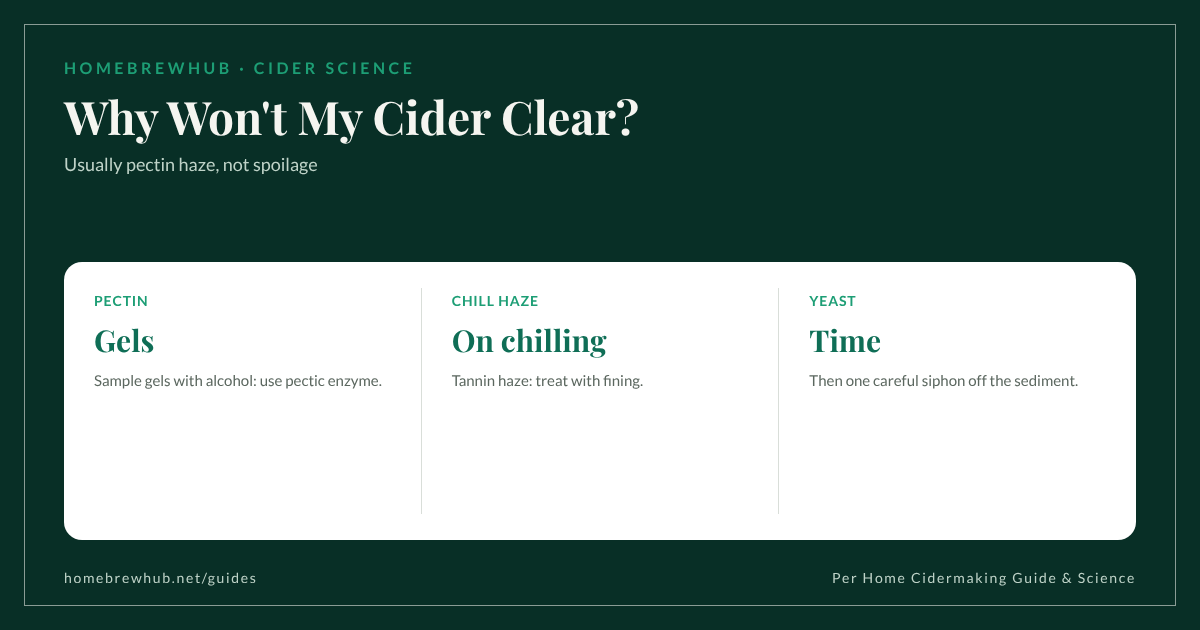
With cider made from dessert apples, the most common cause is pectin haze, not spoilage. A simple test tells you: add a splash of rubbing alcohol to a small sample you'll throw away. If it forms a gel-like clump, pectin is the culprit, and pectic enzyme will clear it, more slowly than if it had gone in at the start. If nothing gels, it's most likely yeast or tannin haze, and time plus one careful transfer off the sediment usually fixes it.
What kind of haze is it?
| Haze | How to tell | What to do |
|---|---|---|
| Pectin haze | A sample forms a gel when alcohol is added | Pectic enzyme, then a couple of weeks to settle |
| Tannin (chill) haze | Shows up specifically when the cider is chilled | Fining |
| Yeast haze | No gel in the alcohol test | Time, then a careful siphon without stirring up sediment |
| Microbial haze | Needs a microscope for an accurate diagnosis; often with off smells | See the faults list below |
Summarized from Home Cidermaking Guide, Chapter 6, and Home Cidermaking Science, Chapters 9 and 11.
Why do dessert apples cause pectin haze?
Pectin can leave juice from dessert apples hazy even after it's had time to clear, which is less of a problem with dedicated cider varieties. That's why the Home Cidermaking Guide adds pectic enzyme to the must right before pitching the yeast, following the dose on the packet. It's inexpensive and only needs adding once.
Can you still fix pectin haze in finished cider?
Yes, but expect it to take longer. Pectic enzyme added after fermentation still works, just more slowly and less effectively than at the start. Add it, then give the cider another couple of weeks to settle before racking. The Guide's test uses rubbing alcohol, so keep the test sample separate and throw it away afterward; it's only for diagnosis and must never go back into the batch.
Not all haze is the same, and there's no universal "just add a fining agent". Pectin haze needs enzyme, chill haze needs fining, and yeast haze mostly needs time.
When does haze mean a fault?
Haze that comes with an off smell points to microbes rather than chemistry. Home Cidermaking Science lists the main ones:
| Fault | Signs | What the book recommends |
|---|---|---|
| Cider sickness (Zymomonas) | Lemon or banana smell, haze | Raise acidity to 0.5%, add active yeast with nutrients |
| Ropiness | Slimy texture, like egg white | SO₂ (100 ppm) plus fining with bentonite or gelatin |
| Film yeasts (Candida, Pichia) | Solvent smell, film on the surface | Top up the vessel, add 100 ppm SO₂ |
| Acetic acid bacteria | Vinegar smell, jelly-like film | As for film yeasts if caught early; if badly acetified, neutralize with potassium carbonate |
Perry has one extra case: two clear perries can turn milky when blended, because of procyanidins. It's harmless; see Cider vs Perry.
Plan your next batch, including enzyme and nutrients, in the Cider calculator. For sulfite at bottling, see How Much Sulfite Should You Add to Cider at Bottling?
Clear cider, step by step and in depth
Home Cidermaking Guide covers the alcohol test in Chapter 6; Home Cidermaking Science covers clarification in Chapter 9 and diagnosing faults in Chapter 11.
Educational content. Rules on home fermentation vary by country; check the law where you live. Full disclaimer