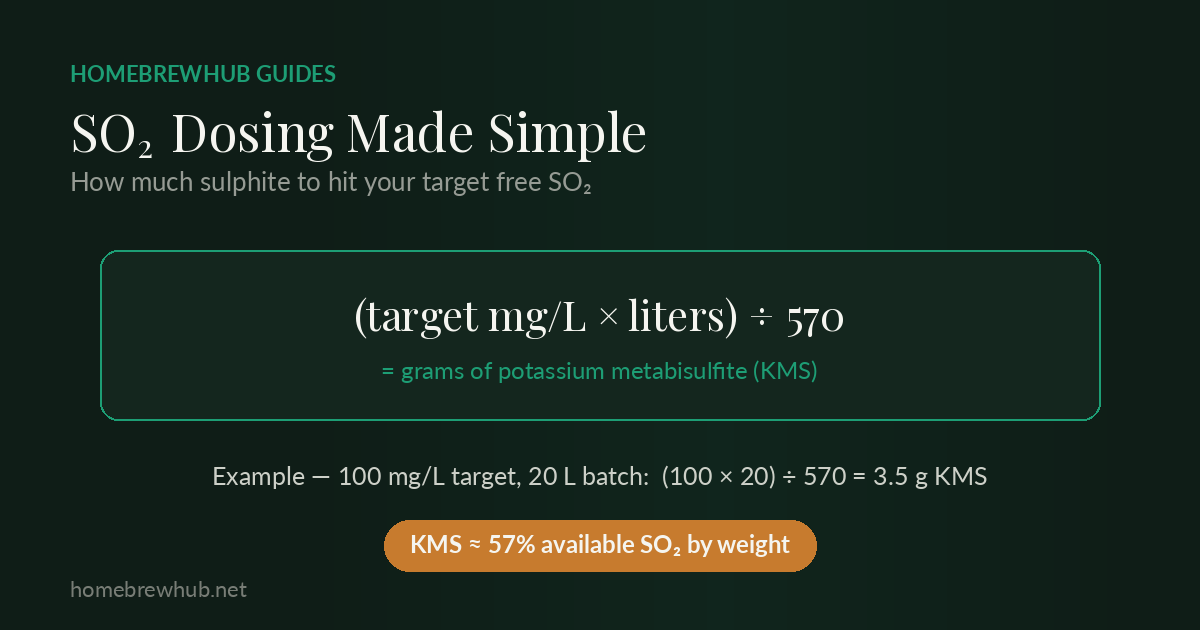
To calculate potassium metabisulfite (KMS) dosage: grams of KMS = (target free SO2 in mg/L × batch volume in liters) ÷ 570. For example, a 20L batch targeting 100 mg/L free SO2 needs (100 × 20) ÷ 570 ≈ 3.5g of KMS.
What SO₂ is actually doing
Sulphite (added as potassium metabisulfite, often shortened to KMS) protects wine from oxidation and unwanted microbial activity. "Free SO₂" is the portion still active and available to do that job — it's the number style targets refer to, not the total amount you've ever added.
Different stages call for different free SO₂ targets: stopping a sweet wine's fermentation, cold-stabilizing before bottling, or protecting a base wine before fortification each have their own recommended range. This guide covers the dosing math itself — check your specific style's target level before calculating.
What's the SO₂ dosing formula?
Potassium metabisulfite is roughly 57% available SO₂ by weight — the rest is inert carrier. That gives a straightforward conversion:
grams of KMS = (target mg/L × batch volume in liters) ÷ 570
570 comes from 1 gram of KMS at 57% purity yielding 570 mg of SO₂. If your specific KMS product lists a different purity on the label, substitute it — some suppliers vary slightly from the standard 57%.
Worked example
Say your target is 100 mg/L free SO₂ (a typical level for stopping fermentation on a sweet wine) across a 20 L batch:
(100 × 20) ÷ 570 = 3.5 g of KMS
Dissolve the weighed KMS in a small amount of water or must first, then stir it thoroughly into the full batch — sprinkling dry powder directly onto the surface leads to uneven distribution.
Why "free" SO₂ isn't the whole story
The formula above gets you to a target free SO₂ level assuming none is already present. In practice, wine that's already been sulphited earlier in the process retains some free SO₂ — dosing again at the full calculated amount on top of that can overshoot your target and add a noticeable sulphur bite to the finished wine.
If you've sulphited at an earlier stage (crush, must prep) and are dosing again for stabilization, treat the formula's result as a ceiling, not a fixed addition — going in with roughly 70–80% of the calculated amount, then adjusting on your next batch based on taste and results, avoids overshooting on a stage where a titration kit isn't part of your normal process.
Skip the manual math
The wine calculator applies this formula directly to your batch size and target style — no separate conversion needed.
For the full picture on sulphite's role in preventing spoilage and oxidation, see Chapter 8 of Home Winemaking Science.
Handle potassium metabisulfite in a well-ventilated area — the fumes can irritate airways. If you have a sulphite sensitivity or asthma, take extra precaution or consult a doctor before working with concentrated sulphite solutions.