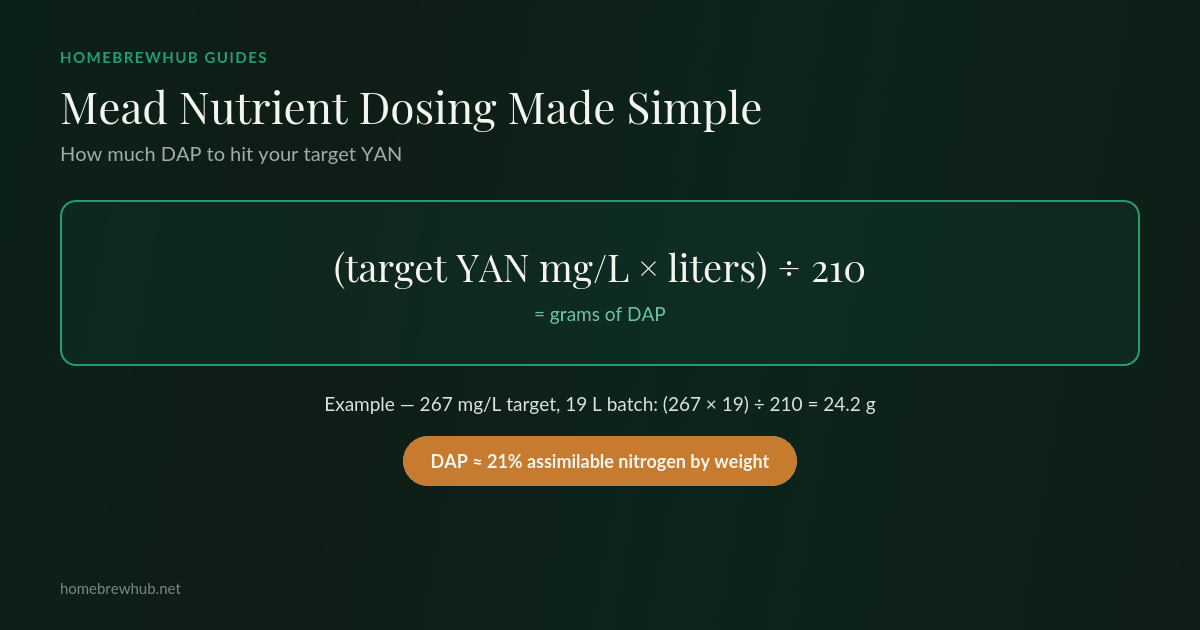
To calculate diammonium phosphate (DAP) dosage for mead: grams of DAP = (target YAN increase in mg/L × batch volume in liters) ÷ 210. For example, a 19 L batch targeting the research-backed 267 mg/L YAN level needs (267 × 19) ÷ 210 ≈ 24.2 g of DAP.
Why mead needs nitrogen supplementation more than most fermented drinks
Yeast Assimilable Nitrogen (YAN) covers the forms of nitrogen — ammonia and free amino acids — that yeast can actually use to build new cells and complete fermentation. Grape must and malted grain both naturally contain a reasonable amount of usable nitrogen. Honey diluted with water does not: it's 85-95% sugar by dry weight, with only trace amounts of minerals and amino acids left over.
Without supplementation, mead fermentation runs slow, can stall before finishing, and stressed yeast cells are more likely to produce hydrogen sulfide — a compound with a sharp rotten-egg smell.
What's the DAP dosing formula?
Diammonium phosphate is roughly 21% nitrogen by weight. Dissolved into a must, 1 gram of DAP per liter raises YAN by approximately 210 mg/L. That gives a straightforward conversion:
grams of DAP = (target YAN increase in mg/L × batch volume in liters) ÷ 210
Most published research points to 267 mg/L as the optimal total YAN target for mead fermentation specifically — higher than the 150-250 mg/L range typically cited for wine, reflecting how much further honey falls short on its own. International standards (based on OIV guidelines) cap DAP-derived nitrogen at 300 mg/L; going past that risks excess yeast biomass and a buildup of ethyl carbamate.
Worked example
For a 19 L (5 gal) batch targeting the standard 267 mg/L YAN level:
(267 × 19) ÷ 210 = 24.2 g of DAP
| Batch size | DAP at 267 mg/L target |
|---|---|
| 4 L (1 gal) | 5.1 g |
| 19 L (5 gal) | 24.2 g |
| 23 L (6 gal) | 29.3 g |
Why splitting the dose across several days matters
Adding the full calculated amount in one shot at pitch is a common mistake. At the very start of fermentation, the yeast population is still small and can't efficiently take up a large nutrient dose all at once — part of it goes unused, and an overwhelmed, stressed colony is more likely to produce hydrogen sulfide as a byproduct.
Split the total DAP dose into portions added over the first four days of active fermentation — for example, roughly a third at pitch, a third around day two, and the remainder around day four — rather than dosing everything up front.
In a controlled experiment, adding DAP to honey must cut fermentation time at 25°C (77°F) from 10 days down to 4 days, and the finished mead also showed higher concentrations of esters responsible for pleasant fruity aroma notes. Nitrogen deficiency doesn't just slow fermentation down — it measurably hurts the finished drink's aroma.
Skip the manual math
The mead calculator's Nutrient tool applies this formula directly, plus builds a staggered Day 0/2/4 dosing schedule for your batch size.
For the full comparison of nitrogen sources (DAP, pollen, Fermaid) and the chemistry behind YAN, see Home Meadmaking Science, Chapter 3.
Handle DAP and other fermentation salts as directed on the product label. Over-fertilizing a must beyond recommended YAN targets doesn't speed fermentation further and can encourage excess yeast biomass at the expense of mead quality.