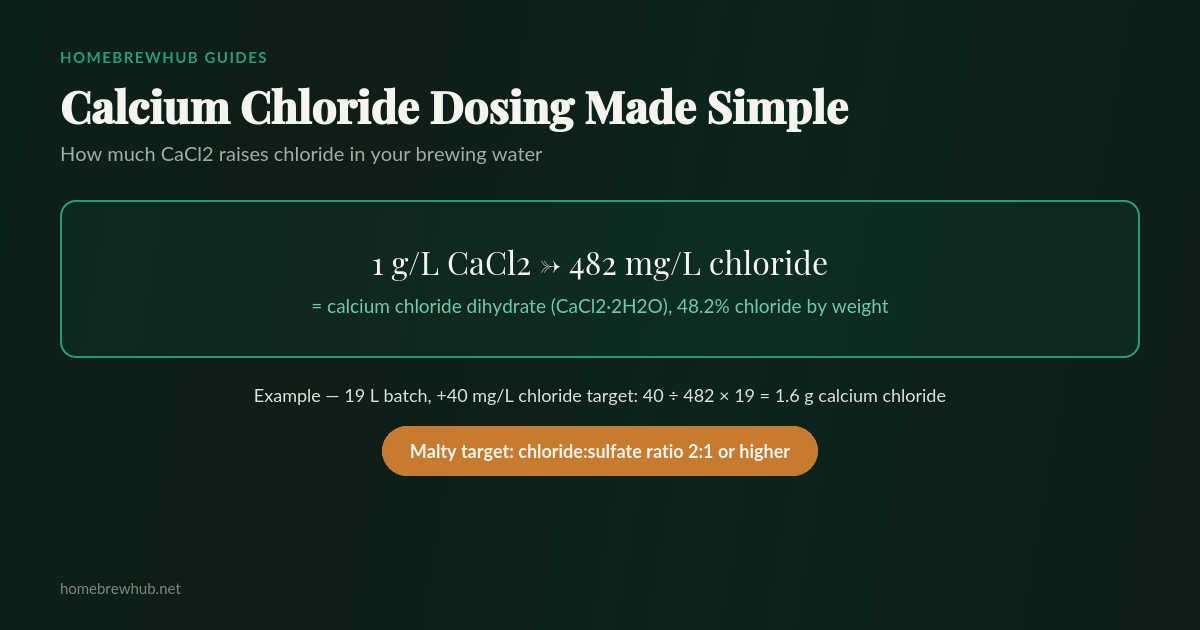
To calculate calcium chloride dosage for brewing water: 1 gram of calcium chloride (calcium chloride dihydrate) dissolved per liter raises chloride by approximately 482 mg/L. For example, a 19 L batch targeting a 40 mg/L chloride increase needs (40 ÷ 482) × 19 ≈ 1.6 g of calcium chloride.
What's the calcium chloride dosing formula?
Calcium chloride's chemical formula is CaCl₂·2H₂O — calcium chloride dihydrate, the form most commonly sold for brewing. By molecular weight, chloride (Cl) makes up roughly 48.2% of the compound, with calcium and water of crystallization accounting for the rest. That gives a direct conversion:
grams of calcium chloride = (target chloride increase in mg/L ÷ 482) × batch volume in liters
The same gram of calcium chloride also raises calcium by roughly 273 mg/L (27.3% of its weight) — the same calcium contribution role gypsum plays, useful to track together if you're also targeting a specific mash pH.
Worked example
For a 19 L (5 gal) batch targeting a 40 mg/L chloride increase for a malt-forward beer:
(40 ÷ 482) × 19 = 1.6 g of calcium chloride
| Batch size | CaCl₂ for +40 mg/L chloride |
|---|---|
| 4 L (1 gal) | 0.33 g |
| 19 L (5 gal) | 1.6 g |
| 23 L (6 gal) | 1.9 g |
Why chloride specifically, and how it pairs with sulfate
Chloride is the ion most directly linked to how round and full a malt-forward beer feels on the palate, the counterpart to sulfate's effect on hop dryness. Used together, calcium chloride and gypsum let you dial in a specific chloride:sulfate ratio rather than just adding "more minerals" in general.
A chloride:sulfate ratio of 2:1 or higher is the common target for malt-forward styles — the reverse of the 2:1 sulfate:chloride ratio used for hop-forward IPAs. Neither mineral changes actual measured bitterness (IBU); both shift how the same bitterness and malt character are perceived.
Skip the manual math
The beer calculator's Water Chemistry tool applies this formula directly alongside gypsum, tracking your full chloride:sulfate ratio as you adjust.
For the full water chemistry picture — including mash pH correction and regional water profile matching — see Home Brewing Science, Chapter 04.
This formula assumes calcium chloride is dissolved directly into brewing water with no pre-existing chloride content. Test your source water or use published local water reports to determine your true starting point before adding minerals.